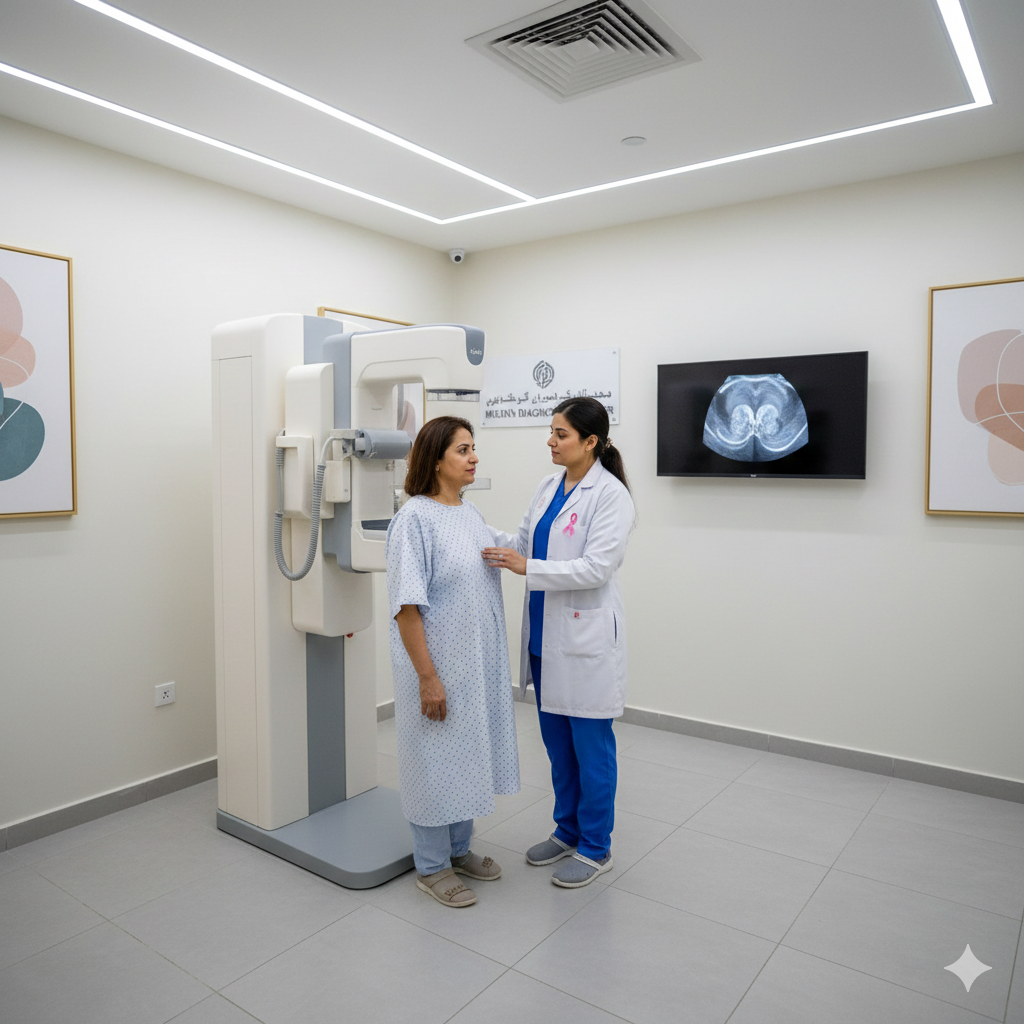
Breast cancer is increasing in Pakistan, and South Punjab is no exception. Many women in Multan, Bahawalpur, Khanewal, Lodhran, Vehari, and Rahim Yar Khan are diagnosed at late stages due to lack of awareness, fear of testing, or limited access to screening services. One of the most effective tools for early detection is the mammogram, a simple imaging test that can detect breast cancer before symptoms appear.
At Ghazi Lab & Diagnostic Center, Nishtar Road, Multan, we believe that awareness and early screening are the keys to saving lives.
What is a Mammogram?
A mammogram is a specialized X-ray of the breast used to detect abnormalities such as lumps, calcifications, or early signs of cancer that cannot be felt during physical examination.
It is considered the gold standard for breast cancer screening worldwide because it can detect disease at a very early stage, when treatment is most successful.

Why is Mammogram Important for South Punjab Women?
In South Punjab, many women hesitate to discuss breast health due to cultural barriers, shyness, or fear. As a result, breast cancer is often diagnosed too late. A regular mammogram helps in:
-
Detecting cancer before symptoms develop
-
Identifying tiny abnormalities early
-
Reducing the need for aggressive treatment
-
Increasing survival rates
-
Giving women peace of mind
By promoting mammogram awareness, healthcare centers like Ghazi Lab & Diagnostic Center are helping women take control of their health.
Who Should Get a Mammogram?
Doctors generally recommend mammogram screening for:
-
Women aged 40 years and above (routine screening)
-
Women with a family history of breast cancer
-
Women who notice breast lumps or changes
-
Women with previous breast disease
In Multan and South Punjab, women should not wait for symptoms — routine screening is essential.
How is a Mammogram Done?
The procedure is simple and usually takes 10–15 minutes:
-
The breast is placed on a flat plate.
-
Another plate gently compresses the breast to get a clear image.
-
X-ray images are taken from different angles.
-
A radiologist reviews the images for any abnormalities.
Although some women feel mild discomfort, the test is safe and highly beneficial.
Is Mammogram Safe?
Yes. Mammogram uses a very low dose of radiation that is considered safe for routine screening. The benefits of early cancer detection far outweigh any minimal risks.
Mammogram vs. Self-Breast Examination
Self-breast examination is useful, but it cannot detect very small tumors. Mammogram can find abnormalities long before they become noticeable.
In simple terms:
-
Self-check = awareness
-
Mammogram = early detection
Both together offer the best protection.
Role of Mammogram in Breast Cancer Prevention
Regular mammograms help doctors:
-
Detect cancer at stage 0 or stage 1
-
Reduce mortality rates
-
Plan less invasive treatment
-
Avoid unnecessary biopsies in many cases
For women in Multan and South Punjab, this test can truly be life-saving.
What Happens if Mammogram Shows a Problem?
If an abnormality is detected, doctors may recommend:
-
FNAC (Fine Needle Aspiration Cytology)
-
Trucut Biopsy
-
Further imaging tests
These services are available through trusted diagnostic centers like Ghazi Lab & Diagnostic Center, Nishtar Road, Multan.
Why Choose Ghazi Lab & Diagnostic Center, Multan?
Located on Nishtar Road, Multan, Ghazi Lab & Diagnostic Center supports breast health awareness by:
-
Guiding patients about screening
-
Coordinating mammogram referrals
-
Providing FNAC and biopsy services
-
Offering accurate pathology reports
-
Maintaining a patient-friendly environment
-
Ensuring affordable diagnostic care
Women from across South Punjab can rely on this center for trustworthy medical guidance.
Conclusion
A mammogram is not something to fear — it is a powerful tool that can save lives. Women in Multan and South Punjab must prioritize regular screening, especially after the age of 40. Early detection through mammogram, followed by accurate diagnostic tests like FNAC or biopsy, can prevent serious complications and improve survival rates.